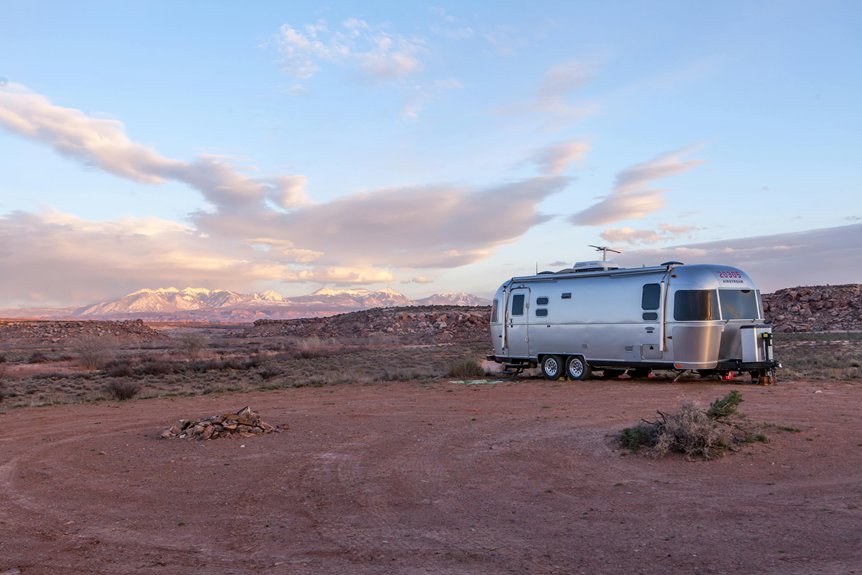
If you’re planning a dry camping trip, understanding your RV’s capabilities and preparing essential equipment are vital. Knowing how to manage water and waste effectively can make or break your experience. With the right power solutions and ideal locations, you can truly enjoy the beauty of nature. But what safety measures should you take to guarantee a smooth adventure? Let’s explore the key aspects of RV dry camping that every adventurer should know.
Understanding Your RV’s Capabilities
When you’re planning to dry camp in your RV, understanding its capabilities is vital for a successful experience. Start by checking your RV’s water tank capacity. Knowing how much fresh water you have will help you manage your usage wisely.
Next, familiarize yourself with your power sources—whether you’re relying on batteries, solar panels, or a generator. This knowledge will guide your energy consumption, especially for lighting and appliances.
Additionally, be aware of your waste tank capacities; understanding when to dump is essential to avoid any unpleasant surprises.
Finally, familiarize yourself with your RV’s insulation and heating systems, as temperature control can greatly impact your comfort in varying weather conditions. With this understanding, you’ll be better prepared for your dry camping adventure.
Essential Equipment for Dry Camping
While planning your dry camping trip, having the right equipment can make all the difference in your comfort and convenience.
Start with a good quality solar panel or generator to keep your devices charged. A reliable battery bank is essential for powering lights and small appliances.
Don’t forget a portable water filter or purification system, ensuring you have safe drinking water. Invest in a sturdy camp stove or portable grill for cooking meals.
A compact camping toilet can also be a game-changer, offering privacy and comfort.
Finally, pack an extensive first-aid kit and proper outdoor gear, like flashlights and warm clothing. With these essentials, you’ll be well-prepared for a successful and enjoyable dry camping experience.
Managing Water and Waste
Having the right equipment for your dry camping adventure sets the stage for managing water and waste effectively. Start by carrying enough fresh water in your tank, but also invest in portable water containers for easy refills. Use water-saving devices like low-flow showerheads and faucet aerators to conserve every drop.
For waste management, verify your RV has a well-maintained holding tank. Regularly check levels and empty when needed, preferably at designated dump stations.
Bring biodegradable waste bags for trash and consider a portable toilet for comfort. Don’t forget to research local regulations on waste disposal, and always leave no trace.
Power Solutions for Off-Grid Camping
As you begin your off-grid camping adventure, securing reliable power sources is essential for a comfortable experience.
Start by considering solar panels; they’re a popular choice for RVers. Lightweight and easy to install, they can provide ample energy for your needs. Pair them with a quality battery bank to store power for nighttime use.
If you need more power, a portable generator can be a good backup option, especially for heavy-duty appliances. Just remember to factor in fuel needs and noise levels.
Lastly, don’t underestimate the potential of a power bank for charging small devices like phones and tablets.
With the right power solutions, you can enjoy the great outdoors without sacrificing comfort or convenience.
Finding Ideal Boondocking Locations
When you’re ready to start your boondocking adventure, finding the right location is essential for an enjoyable experience.
Begin by researching public lands, such as national forests or Bureau of Land Management areas, which often allow free camping. Use apps and websites like Campendium or iOverlander to discover hidden gems and read reviews from fellow campers.
Consider factors like accessibility, proximity to water sources, and scenic views. Pay attention to local regulations and any permit requirements.
Arriving early can help you secure a prime spot, especially during peak seasons. Finally, don’t forget to check your cellular service availability if you need to stay connected.
Happy hunting for that perfect boondocking paradise!
Safety Tips for Dry Camping Adventures
While exploring the great outdoors through dry camping, it’s important to prioritize your safety.
First, always let someone know your itinerary and estimated return time. Make sure your RV is in good condition, checking brakes and tires before hitting the road.
When you arrive at your site, choose a flat, stable area away from hazards like falling rocks or floods. Keep a well-stocked first-aid kit handy, and consider carrying a portable phone charger in case of emergencies.
Stay aware of wildlife, storing food securely to avoid attracting animals.
Finally, familiarize yourself with local regulations; some areas have specific rules about campfires or waste disposal.
Following these tips will help promote a safer, more enjoyable dry camping adventure.