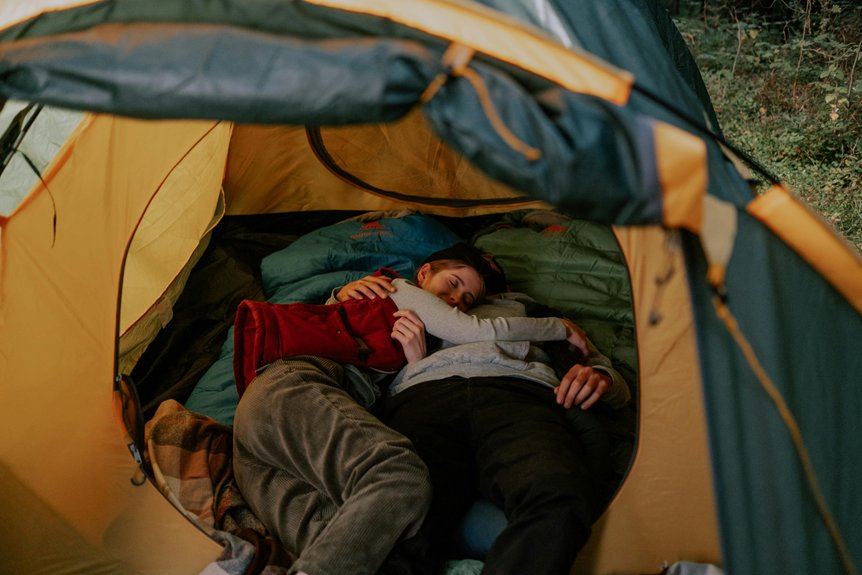
When you’re gearing up for a camping trip, focus on packing lightweight, durable essentials. A well-ventilated tent, a cozy sleeping bag, and a comfortable pad are your sleeping trio. For cooking, a portable stove, lightweight cookware, and dehydrated meals simplify mealtime. Don’t overlook weather-appropriate clothing, a compact first aid kit, and trusty navigation tools. Consider what communication devices you’ll need, keeping safety and enjoyment at the forefront. Curious about entertainment options?
Essential Shelter and Sleeping Gear
When you’re gearing up for a camping trip, your tent and sleeping bag are your home away from home. Choosing the right tent means considering size, weight, and weather conditions. Opt for a lightweight, durable tent with a rainfly and good ventilation.
Make sure it’s easy to set up and take down, especially if you’re moving camps. Don’t forget a reliable ground tarp to protect against moisture and abrasions.
For sleeping, a quality sleeping bag is essential. Select one that fits the climate—whether it’s a cozy down bag for cold nights or a lightweight synthetic for summer.
Complement it with a sleeping pad for insulation and comfort. Remember, your gear should keep you warm, dry, and comfortable, enabling you to embrace nature fully.
Cooking Equipment and Food Supplies
As you prepare for your outdoor adventure, think of your cooking equipment and food supplies as essential elements of your camp setup.
A portable stove is vital for cooking in the wild; choose one that suits your group size and fuel preference. Lightweight cookware, such as nesting pots and pans, saves space and weight.
Don’t forget a reliable lighter or waterproof matches, and pack a sturdy cooler to keep perishables fresh. Opt for versatile utensils like a spork and a knife with a built-in can opener.
Pre-plan meals for efficiency; dehydrated meals or canned goods are excellent choices. Bring spices, oils, and a collapsible wash basin for easy clean-up.
With the right gear, cooking becomes a joy in nature.
Clothing and Personal Items
Cooking equipment isn’t the only preparation you need for an outdoor adventure; your clothing and personal items are equally important.
Dress in layers to adapt to changing weather conditions. Start with moisture-wicking base layers to keep dry, add insulating mid-layers for warmth, and finish with a waterproof jacket. Choose durable, quick-drying pants and sturdy, waterproof hiking boots to tackle rugged terrain.
A wide-brimmed hat and UV-protection sunglasses shield you from the sun, while a warm beanie and gloves prepare you for chilly nights.
Don’t forget a compact, quick-dry towel and eco-friendly toiletries to maintain comfort and hygiene. Bring a reliable headlamp with spare batteries to illuminate your path after sunset.
Pack these essentials to guarantee a cozy, well-prepared camping experience.
Safety and First Aid Essentials
Even the most seasoned outdoor enthusiasts know that packing the right safety and first aid essentials can make all the difference in a wilderness situation.
Start with a compact first aid kit, ensuring it includes adhesive bandages, antiseptic wipes, tweezers, and pain relievers. Add a whistle to signal for help if needed. A multi-tool or knife assists with various tasks, from cutting rope to food preparation.
Include a thermal emergency blanket; it’s lightweight and keeps you warm in unexpected conditions. Don’t forget insect repellent and sunscreen to protect your skin.
Pack a headlamp with extra batteries for hands-free illumination. Finally, carry a waterproof container for matches, ensuring you can start a fire even when conditions are less than ideal.
Navigation and Communication Tools
Finding your way through the wilderness requires more than just a good sense of direction; it demands reliable tools to guide your way.
Start with a topographic map and a trusty compass. Mastering these basics guarantees you won’t rely solely on tech. A GPS device offers pinpoint accuracy, especially in remote areas, but remember to keep it charged.
For communication, pack a two-way radio—ideal for staying in touch with your group over long distances. Don’t forget a portable solar charger to keep your devices powered.
Smartphones with offline map apps can be handy, but they’re no substitute for dedicated gear. A whistle is vital too; it’s a simple yet effective way to signal for help if you find yourself in a bind.
Entertainment and Recreation Gear
When you’re out in the wild, entertainment and recreation gear can transform your camping experience from basic to unforgettable.
Pack a sturdy frisbee or a compact kite for breezy afternoons. A lightweight hammock offers a perfect spot to relax and read a book under the trees.
Bring a durable deck of waterproof playing cards for evenings by the campfire. If you’re near water, a portable fishing rod can add excitement, while a compact inflatable kayak offers thrilling exploration.
Consider a lightweight, foldable guitar for musical nights under the stars. Don’t forget binoculars for birdwatching or stargazing.
With the right gear, your campsite becomes an adventure hub, blending leisure and exploration seamlessly into your outdoor journey.
Environmental Care and Responsibility
While you’re enjoying your exciting outdoor activities, it’s important to remember the impact we’ve on nature. Always bring a reusable water bottle to minimize plastic waste.
Consider packing biodegradable soap and eco-friendly toiletries to keep waterways clean. A portable trash bag is essential for packing out all your waste, helping to leave no trace behind.
For campfires, use a camping stove or designated rings to prevent forest fires and protect natural habitats.
Choose LED lanterns and headlamps to conserve energy. Use a multi-use spork instead of disposable cutlery.
When nature calls, a trowel can help you dig a small hole away from water sources, ensuring responsible waste disposal.
Packing Strategies for Easy Transport
As you prepare for your camping adventure, efficient packing is essential to guarantee everything is easily transportable and accessible.
Start by choosing a reliable backpack with adjustable straps and multiple compartments. This will help distribute weight evenly and keep your gear organized.
Roll your clothes tightly to maximize space and minimize wrinkles. Use packing cubes or stuff sacks to separate items like clothes, food, and gear.
Place heavier items, such as a tent or cooking equipment, at the bottom for balance. Keep essential items, like maps or a flashlight, in outer pockets for quick access.
Opt for multi-purpose gear to reduce bulk—think sporks, collapsible bowls, and all-weather jackets.